
Integrating PCR/PIR Recycled Plastics in the Core Layer: Reducing Carbon Footprint Without Compromising Food Safety
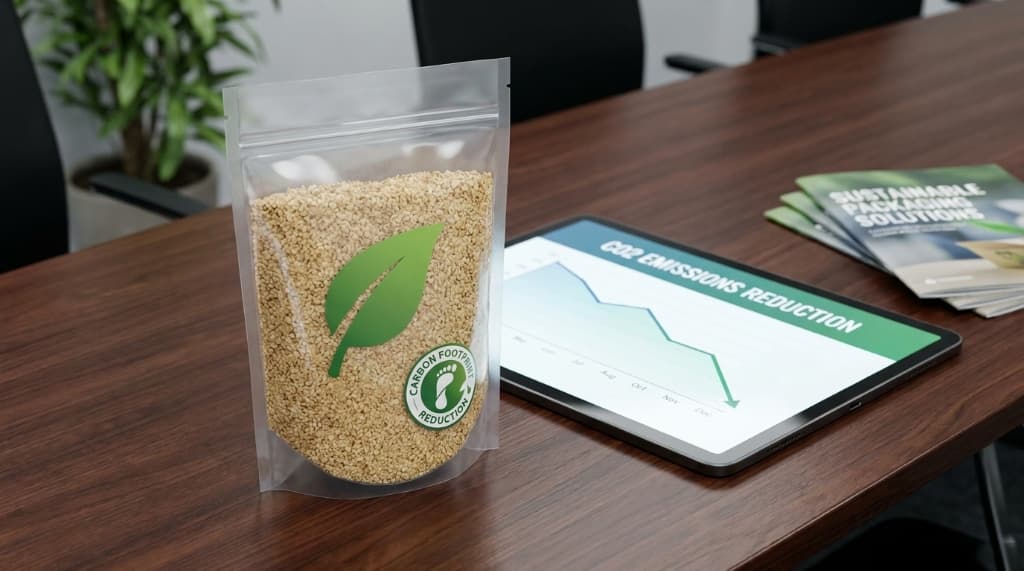
Under increasing global regulatory pressure such as the EU PPWR, CBAM Carbon Tax, and Extended Producer Responsibility (EPR) laws, FMCG brand owners and packaging converters face a critical dual challenge: How to increase recycled plastic content to reduce carbon footprint under ESG mandates, while strictly upholding food contact safety standards and preserving mechanical performance? NOVAPLEX® 5-layer co-extrusion technology provides a breakthrough solution by safely encapsulating 20%–50% PCR/PIR recycled resins within the central core layer.
1. The Packaging Industry's Dual Challenge: ESG Green Growth vs. Food Safety
Incorporating post-consumer recycled (PCR) or post-industrial recycled (PIR) plastic into packaging is essential for ESG compliance. However, utilizing conventional 1-layer or 3-layer blown film extrusion encounters three severe technical barriers:
2. The Breakthrough: Functional Barrier 5-Layer Co-Extrusion Technology
Overcoming the inherent limitations of conventional extrusion, NOVAPLEX® 5-layer blown film technology implements the 'Functional Barrier' design across a symmetrical A/B/C/D/E structure (15% - 20% - 30% - 20% - 15%):
Technical Performance Comparison: Conventional 3-Layer Film vs NOVAPLEX® 5-Layer Film
| Technical / Safety Metric | Standard 3-Layer Film (Direct PCR Blending) | NOVAPLEX® 5-Layer PE Film (PCR in Layer C) |
|---|---|---|
| Food Contact Safety | High risk of non-compliance; potential chemical and odor migration due to direct contact with food. | 100% Safe. Pure virgin outer and inner skins form an impermeable functional barrier against migration. |
| Dart Drop Impact Strength | Decreases 30% - 40% due to degraded recycled polymer chains, prone to drop failure. | Maintains 350g - 420g impact resistance thanks to Metallocene mLLDPE C6/C8 reinforced sub-skin layers. |
| Heat Seal Strength (Hot Tack) | SIT escalates (>110°C), brittle seals, prone to liquid leaking or gusset ruptures. | Maintains Low SIT 88°C - 95°C with Hot Tack > 4.2 N/15mm backed by 100% virgin sealant layer. |
| Maximum Recycled Content | Recommended < 15% to avoid structural failure. | Accommodates 20% - 50% in the core layer without impairing mechanical strength or exterior optics. |
3. BOM Cost Optimization & Tangible ESG Benefits
Beyond regulatory compliance, NOVAPLEX® 5-layer core-encapsulation technology delivers tangible commercial and sustainability returns for packaging converters:
💡 NOVAPLEX® EXPERT CONCLUSION: 'Green transformation must never compromise product performance. With advanced 5-layer co-extrusion technology, NOVAPLEX® empowers packaging converters to guarantee absolute food contact safety and maintain high-speed line efficiency while achieving genuine carbon reduction goals.' — Mr. Nguyen Van Anh, Technical & R&D Director, DNC Film / NOVAPLEX®